
Three Valve Types, Three Different Jobs
Most sanitary process lines end up using a mix of valve types, and it is common for an engineer to default to whatever was specified last time rather than reevaluating which valve actually fits the job. A sanitary bleed valve exists to drain or vent a line. A sample valve exists to draw fluid for testing. Sanitary diaphragm valves exist to control flow, and it does that job differently than a ball valve does.
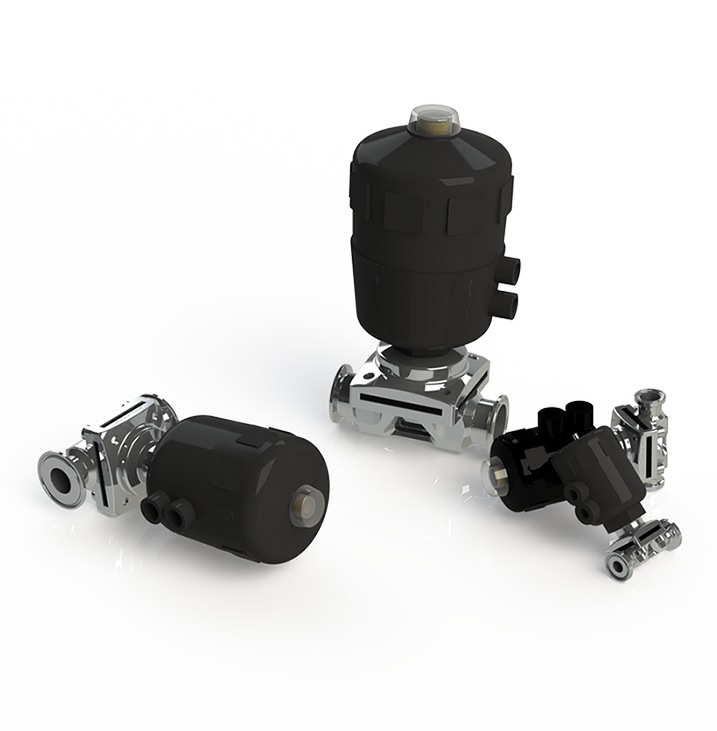
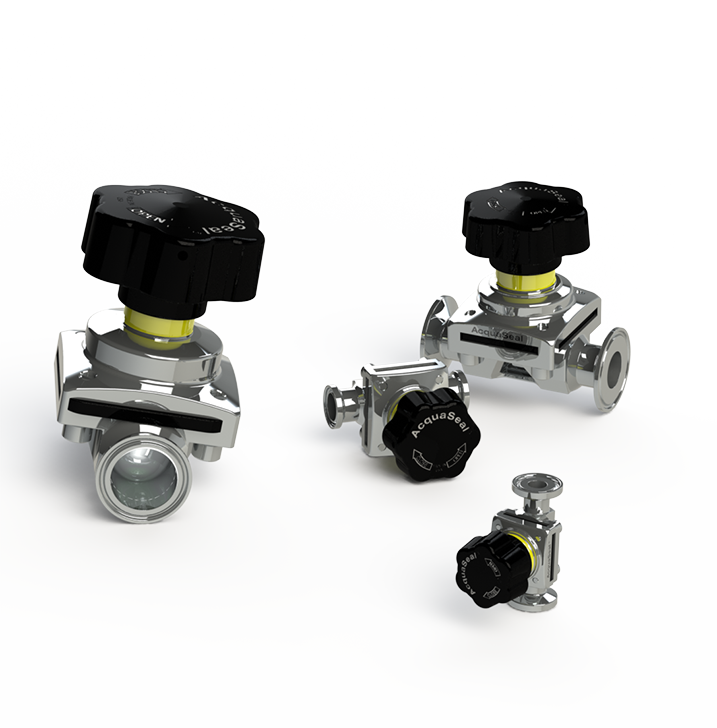
Fluid Line Technology manufactures sanitary diaphragm valves for biotechnology, pharmaceutical, and food and beverage applications, in two-way and multi-port configurations, available manual or actuated.
How a Diaphragm Valve Differs From a Ball Valve
A ball valve controls flow with a rotating ball that has a bore through the center. A diaphragm valve uses a flexible membrane that presses down to shut off flow against a weir or straight-through body. The practical difference shows up in cleanability and control: a diaphragm valve’s flexing membrane creates a smooth, crevice-minimized flow path when properly designed, and it tends to offer finer throttling control than a quarter-turn ball valve.
Two-Way vs. Multi-Port Configurations
A two-way diaphragm valve handles a straightforward on/off or throttling job between two line segments. A multi-port diaphragm valve consolidates what would otherwise be several two-way valves into one body, which reduces the number of welds, fittings, and potential dead legs on a skid. Multi-port configurations tend to make sense on space-constrained skids or wherever several process streams need to be routed through a shared valve manifold.
Manual vs. Actuated: What Drives the Decision
Manual diaphragm valves fit processes where an operator is present and timing is not automated. Actuated valves fit automated or remote-controlled processes, batch sequencing, and any application where consistent, repeatable timing matters more than operator judgment. The choice often comes down to how the surrounding skid or system is already controlled rather than the valve itself.
When a Diaphragm Valve Is the Right Call
Reach for a diaphragm valve when the job is flow control or shutoff within the process stream itself, not simply draining, venting, or sampling. If the point in question is purely a drain or vent, a sanitary bleed valve is the more direct fit. If the point is purely for pulling a sample, a sanitary sample valve is the better fit for that job.
Frequently Asked Questions
A diaphragm valve uses a flexible membrane to shut off flow, which can offer a smoother, more crevice-minimized flow path and finer throttling control than a quarter-turn ball valve.
A multi-port diaphragm valve consolidates multiple flow paths into a single valve body, reducing welds and potential dead legs on space-constrained skids.
Yes. Diaphragm valves are available manual or actuated, in two-way and multi-port configurations.
Biotechnology, pharmaceutical, and food and beverage processes that require precise, hygienic flow control